On Fairness and Tax
A colleague of mine send me this great blog post from The Economist's View, about fairness and tax. The bottom line: "the perception of fairness matters"

A colleague of mine send me this great blog post from The Economist's View, about fairness and tax. The bottom line: "the perception of fairness matters"
he who is only an economist cannot be a good economist. Much more than in the natural sciences, it is true in the social sciences that there is hardly a concrete problem which can be adequately answered on the basis of a single special discipline.-- Hayek, 1967

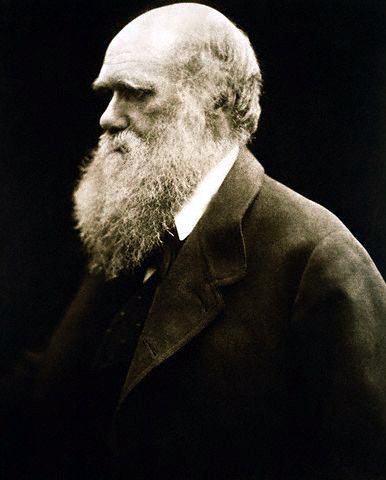 all organic beings are striving to seize on each place in the economy of nature
“The solution, as I believe, is that the modified offspring of all dominant and increasing forms tend to become adapted to many and highly diversified places in the economy of nature”[3].Darwin repeatedly uses the expression “economy of nature” in The Origin of Species and other writings. He was not the first to conceive nature as an economy, although he was among the first to suggest an explicit similarity between natural and political economy. Before Darwin, the idea of nature as an economy had no particular ramification with human economic practices. In The Sacred Theory of the Earth, theologian Thomas Burnet referred to the “Oeconomy of nature” as the “well ordering of the great Family of living Creatures”[4] an order of divine origin. Swedish naturalist Carl Linnaeus, in his Specimen Academicum de Oeconomia Naturae, construed this divine order has being self-organized, exhibiting a balance of births and deaths, a complementarity between the function and purpose of life forms[5]. Adam Smith recognized the unity of this economy, where all living forms strive for “self-preservation, and the propagation of the species” but are limited in their problem-solving capacities, and hence must often rely on intuition instead of reasoning[6]. Lyell, in his Principle of Geology, describes how the involuntary agency of human and other animals “
contribute to extend or limit the geographical range and numbers of certain species, in obedience to general rules in the economy of nature, which are for most the part out of our control”[7].Where Linnaeus saw a clockwork organization, Lyell’s representation of the world was more that of a dynamic equilibrium.
“the body of knowledge concerning the economy of nature (…) the study of all those complex interrelationships referred to by Darwin as the condition of the struggle for existence”[9].Consequently, Darwin’s main contributions are its transforming biology into a historical science (like geology) and an economic science[10]. From evolutionary game theory to biological markets, this approach is now flourishing.
It is not from the benevolence of the butcher, the brewer or the baker that we expect our dinner, but from their regard to their own interest. We address ourselves not to their humanity but to their self-love, and never talk to them of our necessities but of their advantages. Nobody but a beggar chooses to depend chiefly upon the benevolence of their fellow-citizens.Everybody will remember the famous Gordon Gekko's speech in Oliver Stone's Wall Street (1987):
The point is, ladies and gentlemen, that greed—for lack of a better word—is good. Greed is right. Greed works. Greed clarifies, cuts through, and captures the essence of the evolutionary spirit. Greed, in all of its forms—greed for life, for money, for love, knowledge—has marked the upward surge of mankind.
How selfish soever man may be supposed, there are evidently some principles in his nature, which interest him in the fortune of others, and render their happiness necessary to him, though he derives nothing from it except the pleasure of seeing it. Of this kind is pity or compassion, the emotion which we feel for the misery of others, when we either see it, or are made to conceive it in a very lively manner. That we often derive sorrow from the sorrow of others, is a matter of fact too obvious to require any instances to prove it; for this sentiment, like all the other original passions of human nature, is by no means confined to the virtuous and humane, though they perhaps may feel it with the most exquisite sensibility. The greatest ruffian, the most hardened violator of the laws of society, is not altogether without it.In "Adam Smith, Behavioral Economist", Ashraf et al. (2005, The Journal of Economic Perspectives, 19, 131-145) discusses the relevance of Smith for experimental economics. In "The Two Faces of Adam Smith" (Southern Economic Journal, 65, 1-19), another Smith (Vernon) analyses the dual nature of Smith's (Adam) writing.
Is Greed Good?There will be a conference a conference to commemorate the 250th anniversary of The Theory of Moral Sentiments in 2009 in Oxford (see CFP on PhilEcon website).
Economists are finding that social concerns often trump selfishness in financial decision making, a view that helps to explain why tens of millions of people send money to strangers they find on the Internet
By Christoph Uhlhaas
In inequity aversion models (Bolton and Ockenfels, 2000; Fehr and Schmidt, 1999), which focus on the outcomes or payoffs of social interactions, any deviation between an individual's payoff and the equitable payoff (e.g., the mean payoff or the opponent's payoff) is supposed to be negatively valued by that individual. More formally, the crucial difference between an outcome-based inequity aversion model and the homo economicus model is that, in addition to the argument representing the individual's own payoff, a new argument is inserted in the utility function showing the individual's inequity aversion (social preferences), as in the social utility model (see, e.g., Handgraaf et al., 2003; Loewenstein et al., 1989; Messick and Sentis, 1985). The individual is then assumed to maximize this adapted utility function.
In intention-based reciprocity models it is not the outcomes of the interaction as such that matter, but the intentions of the players (Rabin, 1993; see also Falk and Fischbacher, 2006). The idea is that people want to reciprocate perceived (un)kindness with (un)kindness, because this increases their utility. Obviously, beliefs play a crucial role here. More formally, in this case, in addition to an individual's own payoff a new argument is inserted in the utility function incorporating the assumed reciprocity motive. As a consequence, if someone is perceived as being kind it increases the individual's utility to reciprocate with being kind to this other person. Similarly, if the other is believed to be unkind, the individual is better off by being unkind as well, because this adds to her or his utility. Again, this adapted utility function is assumed to be maximized by the individual.
The may issue of the Annals of the New York Academy of Sciences is devoted to Reward and Decision Making in Corticobasal Ganglia Networks. Many big names in decision neuroscience (Berns, Knutson, Delgado, etc.) contributed.
Introduction. Current Trends in Decision Making
Bernard W Balleine, Kenji Doya, John O'Doherty, Masamichi Sakagami
Learning about Multiple Attributes of Reward in Pavlovian Conditioning
ANDREW R DELAMATER, STEPHEN OAKESHOTT
Should I Stay or Should I Go?. Transformation of Time-Discounted Rewards in Orbitofrontal Cortex and Associated Brain Circuits
MATTHEW R ROESCH, DONNA J CALU, KATHRYN A BURKE, GEOFFREY SCHOENBAUM
Model-Based fMRI and Its Application to Reward Learning and Decision Making
JOHN P O'DOHERTY, ALAN HAMPTON, HACKJIN KIM
Splitting the Difference. How Does the Brain Code Reward Episodes?
BRIAN KNUTSON, G. ELLIOTT WIMMER
Reward-Related Responses in the Human Striatum
MAURICIO R DELGADO
Integration of Cognitive and Motivational Information in the Primate Lateral Prefrontal Cortex
MASAMICHI SAKAGAMI, MASATAKA WATANABE
Mechanisms of Reinforcement Learning and Decision Making in the Primate Dorsolateral Prefrontal Cortex
DAEYEOL LEE, HYOJUNG SEO
Resisting the Power of Temptations. The Right Prefrontal Cortex and Self-Control
DARIA KNOCH, ERNST FEHR
Adding Prediction Risk to the Theory of Reward Learning
KERSTIN PREUSCHOFF, PETER BOSSAERTS
Still at the Choice-Point. Action Selection and Initiation in Instrumental Conditioning
BERNARD W BALLEINE, SEAN B OSTLUND
Plastic Corticostriatal Circuits for Action Learning. What's Dopamine Got to Do with It?
RUI M COSTA
Striatal Contributions to Reward and Decision Making. Making Sense of Regional Variations in a Reiterated Processing Matrix
JEFFERY R WICKENS, CHRISTOPHER S BUDD, BRIAN I HYLAND, GORDON W ARBUTHNOTT
Multiple Representations of Belief States and Action Values in Corticobasal Ganglia Loops
KAZUYUKI SAMEJIMA, KENJI DOYA
Basal Ganglia Mechanisms of Reward-Oriented Eye Movement
OKIHIDE HIKOSAKA
Contextual Control of Choice Performance. Behavioral, Neurobiological, and Neurochemical Influences
JOSEPHINE E HADDON, SIMON KILLCROSS
A "Good Parent" Function of Dopamine. Transient Modulation of Learning and Performance during Early Stages of Training
JON C HORVITZ, WON YUNG CHOI, CECILE MORVAN, YANIV EYNY, PETER D BALSAM
Serotonin and the Evaluation of Future Rewards. Theory, Experiments, and Possible Neural Mechanisms
NICOLAS SCHWEIGHOFER, SAORI C TANAKA, KENJI DOYA
Receptor Theory and Biological Constraints on Value
GREGORY S BERNS, C. MONICA CAPRA, CHARLES NOUSSAIR
Reward Prediction Error Computation in the Pedunculopontine Tegmental Nucleus Neurons
YASUSHI KOBAYASHI, KEN-ICHI OKADA
A Computational Model of Craving and Obsession
A. DAVID REDISH, ADAM JOHNSON
Calculating the Cost of Acting in Frontal Cortex
MARK E WALTON, PETER H RUDEBECK, DAVID M BANNERMAN, MATTHEW F. S RUSHWORTH
Cost, Benefit, Tonic, Phasic. What Do Response Rates Tell Us about Dopamine and Motivation?
YAEL NIV
It was known since a couple of years that oxytocin (OT) increases trust (Kosfeld, et al., 2005): in the Trust game, players transfered more money once they inhale OT. Now recent research also suggest that it increases generosity. In a paper presented at the ESA (Economic Science Association, an empirically-oriented economics society) meeting, Stanton, Ahmadi, and Zak, (from the Center for Neuroeconomics studies) showed that Ultimatum players in the OT group offered more money (21% more) than in the placebo group--$4.86 (OT) vs. $4.03 (placebo). They defined generosity as "an offer that exceeds the average of the MinAccept" (p.9), i.e., the minimum acceptable offer by the "responder" in the Ultimatum. In this case, offers over $2.97 were categorized as generous. Again, OT subjects displayed more generosity: the OT group offered $1.86 (80% more) over the minimum acceptable offer, while placebo subjects offered $1.03.

The choice wasn't easy, and I may be influenced by my research interests, but here is what I think are the most important papers in the field:
Phoebe: I just found a selfless good deed; I went to the park and let a bee sting me.Altruism is a lively research topic. The evolutionary foundations, neural substrates, psychological mechanisms, behavioral manifestations, formal modeling and philosophical analyses of cooperation constitute a coherent—although not unified—field of inquiry. See for instance how neuroscience, game theory, economic, philosophy, psychology and evolutionary theory interact in Penner et al. 2005; Hauser 2006; Fehr and Fischbacher 2002; Fehr and Fischbacher 2003. The nature of prosocial behavior, from kin selection to animal cooperation to human morality can be considered as a progressive Lakatosian research programs. Altruism has a great conceptual "sex-appeal" because it is mystery for two types of theoreticians: biologists and economists. They both wonder why an animal or an economic agent would help another: since these agents maximize fitness/utility, altruistic behavior is suboptimal. Altruims (help, trust, fairness, etc.) seems intuitively incoherent with economic rationality and biological adaptation, with markets and natural selection. Or is it?
Joey: How is that a good deed?
Phoebe: Because now the bee gets to look tough in front of his bee friends. The bee is happy and I am not.
Joey: Now you know the bee probably died when he stung you?
Phoebe: Dammit!
- [From Friends, episode 101]
The research reported in this book revealed that most economic exchange, whether with a stranger or a known individual, relies on character values such as honesty, trust, reliability, and fairness. Such values, we argue, arise in the normal course of human interactions, without overt enforcement—lawyers, judges or the
police are present in a paucity of economic transactions (...). Markets are moral in two senses. Moral behavior is necessary for exchange in moderately regulated markets, for example, to reduce cheating without exorbitant transactions costs. In addition, market exchange itself can lead to an understanding of fair-play that can build social capital in nonmarket settings. (Zak, forthcoming)
See how this claim is similar to :
The two fundamental principles of evolution are mutation and natural selection. But evolution is constructive because of cooperation. New levels of organization evolve when the competing units on the lower level begin to cooperate. Cooperation allows specialization and thereby promotes biological diversity. Cooperation is the secret behind the open-endedness of the evolutionary process. Perhaps the most remarkable aspect of evolution is its ability to generate cooperation in a competitive world. Thus, we might add "natural cooperation" as a third fundamental principle of evolution beside mutation and natural selection. (Nowak, 2006)
Where human behaviour is concerned, the distinction between biological altruism, defined in terms of fitness consequences, and ‘real’ altruism, defined in terms of the agent's conscious intentions to help others, does make sense. (Sometimes the label ‘psychological altruism’ is used instead of ‘real’ altruism.) What is the relationship between these two concepts? They appear to be independent in both directions (...). An action performed with the conscious intention of helping another human being may not affect their biological fitness at all, so would not count as altruistic in the biological sense. Conversely, an action undertaken for purely self-interested reasons, i.e. without the conscious intention of helping another, may boost their biological fitness tremendously (Biological Altruism, Stanford Encyclopedia of Philosophy; see also a forthcoming paper by Stephen Stich and the classic Sober & Wilson 1998).
(image from Warneken et al video)
In the first experiment, the chimpanzee saw a person unsuccessfully reach through the bars for a stick on the other side, too far away for the person, but within reach of the ape. The chimpanzees spontaneously helped the reaching person regardless of whether this yielded a reward, or not. A similar experiment with 18-month-old children gave exactly the same outcome. Obviously, both apes and young children are willing to help, especially when they see someone struggling to reach a goal. The second experiment increased the cost of helping. The chimpanzees were still willing to help, however, even though now they had to climb up a couple of meters, and the children still helped even after obstacles had been put in their way. Rewards had been eliminated altogether this time, but this hardly seemed to matter. One could, of course, argue that chimpanzees living in a sanctuary help humans because they depend on them for food and shelter. How familiar they are with the person in question may be secondary if they simply have learned to be nice to the bipedal species that takes care of them. The third and final experiment therefore tested the apes' willingness to help each other, which, from an evolutionary perspective, is also the only situation that matters. The set-up was slightly more complex. One chimpanzee, the Observer, would watch another, its Partner, try to enter a closed room with food. The only way for the Partner to enter this room would be if a chain blocking the door were removed. This chain was beyond the Partner's control—only the Observer could untie it. Admittedly, the outcome of this particular experiment surprised even me—and I am probably the biggest believer in primate empathy and altruism. I would not have been sure what to predict given that all of the food would go to the Partner, thus creating potential envy in the Observer. Yet, the results were unequivocal: Observers removed the peg holding the chain, thus yielding their Partner access to the room with food (de Waal)

I put a new paper on my homepage :
Decision-Making: A Neuroeconomic Perspective
Here is the abstract:
This article introduces and discusses from a philosophical point of view the nascent field of neuroeconomics, which is the study of neural mechanisms involved in decision-making and their economic significance. Following a survey of the ways in which decision-making is usually construed in philosophy, economics and psychology, I review many important findings in neuroeconomics to show that they suggest a revised picture of decision-making and ourselves as choosing agents. Finally, I outline a neuroeconomic account of irrationality.
Hardy-Vallée, B. (forthcoming). Decision-making: a neuroeconomic perspective. Philosophy Compass. [PDF]
This paper is the first in my philosophical exploration of neuroeconomics, and I would gladly welcome your comments and suggestions for subsequent research. Email me at benoithv@gmail.com.
(An overview of different conceptions of decision-making in philosophy, economics and psychology.)
Rational agents display their rationality mainly in making decisions. Certain decisions are more basic (turn left or turn right), others are crucial issues (“to be or not to be”). In any case, being an agent entails making choices. Even abstinence is decision, as thinkers like William James or Jean-Paul Sartre once pointed out. In our ordinary use of the word, our folk-psychology inclines us to believe that making a decision implies a deliberation: a weighting of beliefs, desires and intentions (Malle et al., 2001). In philosophy of mind, the standard conception of decision-making equates deciding and forming an intention before an action (Davidson, 1980, 2004; Hall, 1978; Searle, 2001). According to different analysis, this intention can be equivalent to, inferred from or accompanied by, desires and beliefs. Thus, the decisions rational agents make are motivated by reasons. Rational actions are explained by these reasons, the purported causes of the actions. Beliefs and desires are also constitutive of rationality because they justify rational action: there is a logical coherence between beliefs, desires and actions. Actions are irrational when their causes do not justify them. Beliefs and desires are embedded in our interpretations of rational agents as rational agents: “[a]nyone who superimposes the longitudes of desire and the latitudes of belief is already attributing rationality” (Sorensen, 2004, p. 291). Hence, on this account, X is a rational agent if X can be interpreted as an agent whose actions are justified by the beliefs and desires that caused her to make a particular choice. The attribution of rational agency is then based on the success of applying an interpretation scheme that presuppose the rationality of the agent, such as the Dennettian "intentional stance", the Davidsonian "principle of charity" or the Popperian "principle of rationality" (Davidson, 1980; Dennett, 1987; Popper, 1994).
The abstract structure of this interpretation scheme has been formalized by theoretical economics and rational-choice theory. Economics, according to a standard definition by Lionel Robbins, is the “science which studies human behavior as a relationship between ends and scarce means which have alternative uses” (Robbins, 1932, p. 15). This definition shows the centrality of decision-making in economic science: since means are scarce, behavior should use them efficiently. The two branches of rational-choice theory, decision theory and game theory, specifies the formal constraints on optimal decision-making in individual and interactive contexts. An individual agent facing a choice between two actions can make a rational decision is she takes into account two parameters: the probability and utility of the consequences of each action. By multiplying the subjective probability by the subjective utility of an action’s outcomes, she can select the action that have the higher subjective expected utility(see Baron, 2000, for an introduction). Game theory models agents making decisions in a strategic context, where the preferences of at least another agent must be taken into account. Decision-making is represented as the selection of a strategy in a game, that is, a set of rules that dictates the range of possible actions and the payoffs of any conjunct of actions. Thus, economic decision-making is mainly about computing probabilities and utilities (Weirich, 2004 ). The philosopher’s beliefs-desire model is hence reflected in the economist’s probability-utility model: probabilities represent beliefs while utilities represent desires.
Rational-choice theory can be construed as a normative theory (what agents should do) or as a descriptive one (what agents do). On its descriptive construal, rational-choice theory is a framework for building predictive models of choice behavior: which lottery an agent would select, whether an agent would cooperate or not in a prisoner’s dilemma, etc. Experimental economics, behavioral economics, cognitive science and psychology (I will refer to these empirical approaches of rationality as ‘psychology’) use this model to study how subjects make decisions and which mechanisms they rely on for choosing. These patterns of inference and behavior can then be compared with rational-choice theory. In numerous studies, Amos Tversky and Daniel Kahneman showed that decision-makers’ judgments deviate markedly from normative theories (Kahneman, 2003; Kahneman et al., 1982; Tversky, 1975). Subjects tend to make decisions according to their ‘framing’ of a situation (the way they represent the situation, e.g. as a gain or as a loss), and exhibit loss-, risk- and ambiguity-aversion (Camerer, 2000; Kahneman & Tversky, 1979, 1991, 2000; Thaler, 1980). In most of their experiments, Tversky and Kahneman asked subjects to choose among different options in fictive situations in order to assess the similarity between natural ways of thinking and normative decision theory. For instance, subjects were presented the following situation (Tversky & Kahneman, 1981):
Imagine that the United States is preparing for the outbreak of an unusual Asian disease, which is expected to kill 600 people. Two alternative programs to combat the disease have been proposed. Assume that the exact scientific estimates of the consequences of the programs are as follows:
- If Program A is adopted, 200 people will be saved
- If Program B is adopted, there is a one-third probability that 600 people will be saved and a two-thirds probability that no people will be saved.
Which of the two programs would you favor?
Most of the respondent opted for A, the risk-averse solution. When respondent were offered the following version:
- If Program A is adopted, 400 people will die
- If Program B is adopted, there is a one-third probability that nobody will die and a two-thirds probability that 600 people will die
Although Program A has exactly the same outcome in both versions (400 people die, 200 will be saved), in the second version Program B is the most popular. Thus, not only are subjects risk-averse, but their risk-aversion depends on the framing of the situation. Subjects have a different attitude whether a situation is presented as a gain or as a loss. The study of decision-making is thus the study of the heuristics and biases that impinge upon human judgment. The explanatory target is the discrepancies between rational-choice theory and human psychology. Just like the psychology of perception tries to explain visual illusions (e.g. the Muller-Lyer illusion), the psychology of decision tries to explain cognitive illusions: why agents prefer systematically one kind of prospect to another when rational-choice theory recommends another. Loss-aversion, for instance, can be explained by the shape of the value function: it is concave for gains and convex for losses. Thus loosing $100 hurts more than winning $100 makes one happy.
Proponent of the ecological rationality approach suggested nonetheless that these heuristics and bias might be adaptive in certain contexts and that failures of human rationality can be lessen in proper ecological conditions. For instance, when probabilities are presented as frequencies (6 out of 10) instead of subjective probabilities (60%), results tend to be much better, partly because we encounter more sequences of events than degrees of beliefs. These heuristics might be ‘fast and frugal’ procedures tailored for certain tasks, thus leading to suboptimal outcomes in other contexts. (Gigerenzer, 1991; Gigerenzer et al., 1999). Or they could be vestigial adaptations to ecological and social environments where our hunters-gatherers ancestors lived. Thus heuristics may not completely ineffective.
References
Baron, J. (2000). Thinking and deciding (3rd ed.). Cambridge, UK ; New York: Cambridge University Press.
Camerer, C. (2000). Prospect theory in the wild. In D. Kahneman & A. Tversky (Eds.), Choice, values, and frames (pp. 288-300). New York: Cambridge University Press.
Davidson, D. (1980). Essays on actions and events. Oxford: Oxford University Press.
Davidson, D. (2004). Problems of rationality. Oxford: Oxford University Press.
Dennett, D. C. (1987). The intentional stance. Cambridge, Mass.: MIT Press.
Gigerenzer, G. (1991). How to make cognitive illusions disappear: Beyond heuristics and biases. European Review of Social Psychology, 2(S 83), 115.
Gigerenzer, G., Todd, P. M., & ABC Research Group. (1999). Simple heuristics that make us smart. New York: Oxford University Press.
Hall, J. W. (1978). Deciding as a way of intending. The Journal of Philosophy, 75(10), 553-564.
Kahneman, D. (2003). A perspective on judgment and choice: Mapping bounded rationality. Am Psychol, 58(9), 697-720.
Kahneman, D., Slovic, P., & Tversky, A. (Eds.). (1982). Judgment under uncertainty : Heuristics and biases. Cambridge ; New York: Cambridge University Press.
Kahneman, D., & Tversky, A. (1979). Prospect theory: An analysis of decision under risk. Econometrica, 47, 263-291.
Kahneman, D., & Tversky, A. (1991). Loss aversion in riskless choice: A reference-dependent model. The Quartely Journal of Economics, 106(4), 1039-1061.
Kahneman, D., & Tversky, A. (2000). Choices, values, and frames. Cambridge, UK: Cambridge University Press.
Malle, B. F., Moses, L. J., & Baldwin, D. A. (2001). Intentions and intentionality : Foundations of social cognition. Cambridge, Mass.: MIT Press.
Popper, K. R. (1994). Models, instruments, and truth: The status of the rationality principle in the social sciences. In The myth of the framework. In defence of science and rationality (pp. 154-184). London: Routledge.
Robbins, L. (1932). An essay on the nature and signifiance of economic science. London Macmillan.
Searle, J. (2001). Rationality in action. Cambridge, Mass.: MIT Press.
Sorensen, R. (2004). Charity implies meta-charity. Philosophy and Phenomenological Research, 26, 290-315.
Thaler, R. H. (1980). Toward a positive theory of consumer choice. Journal of Economic Behavior & Organization, 1(1), 39-60.
Tversky, A. (1975). A critique of expected utility theory: Descriptive and normative considerations. Erkenntnis, V9(2), 163-173.
Tversky, A., & Kahneman, D. (1981). The framing of decisions and psychology of choice. Science, 211, 453-458.
Weirich, P. (2004 ). Economic rationality. In A. in Mele, & Rawlings, P. (Ed.), Oxford handbook of rationality (pp. 380–398). Oxford: Oxford University Press.
In a letter to Nature , a group of political scientist and anthropologist report an experiment designed to test equality preference and inequality aversions. the design was simple:
Subjects are divided into groups having four anonymous members each. Each player receives a sum of money randomly generated by a computer. Subjects are shown the payoffs of other group members for that round and are then provided an opportunity to give 'negative' or 'positive' tokens to other players. Each negative token reduces the purchaser's payoff by one monetary unit (MU) and decreases the payoff of a targeted individual by three MUs; positive tokens decrease the purchaser's payoff by one monetary unit (MU) and increase the targeted individual's payoff by three MUs. Groups are randomized after each round to prevent reputation from influencing decisions; interactions between players are strictly anonymous and subjects know this. Also, by allowing participants more than one behavioural alternative, the experiment eliminates possible experimenter demand effects—if subjects were only permitted to punish, they might engage in this behaviour because they believe it is what the experimenters want.The results support what is often referred to as the "Robin Hood effect": richer individuals were heavily penalized, while poorer received more gift. This would support the hypothesis of Strong Reciprocity (SR), put forth by Fehr, Camerer, Gintins, and many other scholar in behavioral economics. SR implies that individuals will cooperate with cooperator (reciprocal altruism), will not cooperate with cheaters, and are even ready to punish those who cheat others (altruistic punishment):
“people tend to behave prosocially and punish antisocial behavior at cost to themselves, even when the probability of future interactions is low or zero. We call this strong reciprocity." (Gintis, H. (2000). Strong reciprocity and human sociality. Journal of Theoretical Biology, 206(2), p. 177)


